
BILBAO: YOUR ULTIMATE ITINERARY
Updated: Apr 20

Bilbao, located in the Basque Country in northern Spain, is a city that has transformed into one of Spain’s most interesting cultural destinations. Known for the Guggenheim Museum and its walkable center, Bilbao is easy to explore over a few days.
This guide covers Bilbao’s key landmarks, includes practical tips for getting around, and offers a flexible itinerary for one to three days.
*Disclaimer: This post contains affiliate links to products and services we recommend. If you purchase through these links, we may earn a small commission at no additional cost to you. This helps us continue to create helpful travel guides. Thank you for your support.*
BILBAO HIGHLIGHTS


Bilbao has many interesting places to explore - these are the ones worth prioritizing:
Guggenheim Museum Bilbao – The city’s most iconic landmark and one of Europe’s most recognizable buildings. Designed by Frank Gehry, its flowing titanium curves transformed Bilbao into a global cultural destination.
Casco Viejo (Old Town) – Bilbao’s historic center, known for its narrow streets, colorful buildings, and lively atmosphere. This is where the city began, and it remains one of the best areas for walking and discovering traditional pintxos bars.
Zubizuri Bridge – A modern pedestrian bridge designed by Santiago Calatrava, recognizable for its sleek white arch and glass walkway connecting both sides of the river.
Mercado de la Ribera – One of Europe’s largest covered markets, combining fresh produce stalls with casual dining and views over the Nervión River.
Artxanda Viewpoint – One of the best panoramic viewpoints over Bilbao, reached by funicular and offering a clear perspective of the city between mountains and river.
GETTING TO AND AROUND BILBAO
Getting to Bilbao:
By plane – Bilbao Airport (BIO) is located about 15–20 minutes from the city center and offers both domestic and international flights, with regular connections to major European cities.
The Bizkaibus A3247 airport bus runs frequently between the airport and central stops such as Gran Vía and Plaza Moyúa, making it the easiest option for most travelers. Taxis and ride-hailing services are also widely available.
By train – Bilbao is connected by rail to cities such as Madrid, Barcelona, San Sebastián, and Vitoria-Gasteiz. Most long-distance trains arrive at Bilbao-Abando station, which is centrally located and well connected to the metro and tram network.
By car – Useful if Bilbao is part of a longer road trip through the Basque Country or Northern Spain. Driving makes it easier to visit coastal towns and nearby countryside areas, though parking in the city center can be limited.
Getting around Bilbao:
The Barik card is the most convenient and cost-effective way to get around Bilbao, offering discounted fares across metro, tram, buses, and the Artxanda funicular. It can also be used on the Bizkaibus A3247 service between the airport and the city center.
You can purchase and top up the Barik card at the airport and at ticket machines throughout the city.
Bilbao is a compact and walkable city, especially around the Guggenheim Museum, Casco Viejo, Gran Vía, and the riverfront promenade, where many of the main sights are located close together.
For longer distances, the metro is modern and easy to use, connecting key neighborhoods across the city. The tram is particularly useful for travelling along the river and reaching the Guggenheim Museum.
Buses complement the rail network and provide access to areas not directly served by the metro or tram. Taxis and ride-hailing apps are widely available and convenient for short journeys.
BILBAO ITINERARY
Spending one, two, or three days in Bilbao? This itinerary breaks it down so you can make the most of your time.
DAY 1


Morning: Visit the Guggenheim Museum Bilbao, the city’s most famous landmark and a defining example of modern architecture.
Walk around the exterior to see Puppy, a large flower-covered dog sculpture, and Maman, a giant spider sculpture, before exploring the contemporary art collections inside.
Note: The exhibitions inside are modern and conceptual, so they may not appeal to everyone, but the building itself is reason enough to stop by, even without going inside.
From here, continue along the Nervión River promenade toward the Zubizuri Bridge, enjoying views of Bilbao’s mix of modern and historic architecture.
Lunch: Head to the Mercado de la Ribera, a large covered market combining fresh produce stalls with casual restaurants and pintxos bars. It’s a convenient place to sample local specialties, including pintxos, seafood, cheeses, and traditional Basque dishes, all in one stop.
Afternoon: Explore Casco Viejo, Bilbao’s historic district, and walk through the Siete Calles (Seven Streets), browsing local shops.
Continue to Bilbao Cathedral, a Gothic church located in the heart of the Old Town.
Then, stop at Plaza Nueva, a neoclassical square known for its arcaded buildings and lively atmosphere, a great place to pause for a coffee or sample a few pintxos. Good options here include Bar El Globo and La Olla Plaza Nueva.
Evening: Take the Artxanda Funicular to Artxanda Viewpoint for panoramic views over Bilbao. Visiting around sunset offers some of the best views of the city and the Nervión River.
DAY 2

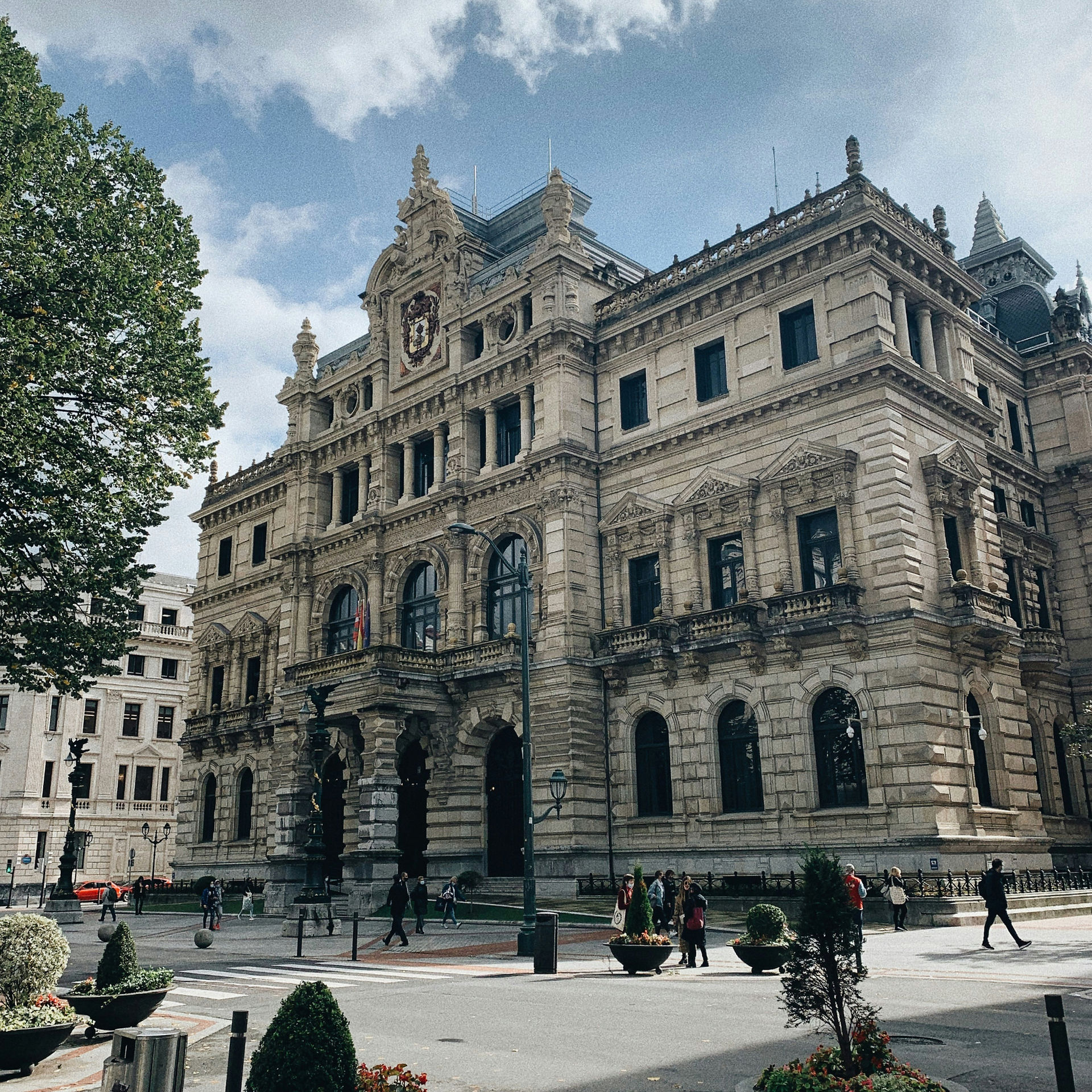
Morning / Lunch: Head to Getxo, a coastal town located about 25 minutes from Bilbao. Take the metro to Areeta Station, located next to the Bizkaia Bridge, a UNESCO World Heritage Site and the world’s oldest transporter bridge still in operation.
Take the transporter across the river, then follow the seaside promenade toward Portu Zaharra, passing the marina and coastal viewpoints along the way.
There are plenty of bars along the waterfront if you’d like to stop for a bite. A good option for croquetas is Itxas Bide Taberna, known for its traditional flavors and relaxed atmosphere.
Afternoon: Return to Bilbao and visit the Bilbao Fine Arts Museum, a highly respected art museum featuring works from the Middle Ages to modern art, including pieces by Goya, El Greco, and Basque artists.
Then, stop at Bascake for one of the best cheesecakes in Bilbao, a local specialty known for its caramelized top and creamy texture.
Evening: Walk along Gran Vía de Don Diego López de Haro, Bilbao’s main shopping avenue, and enjoy some shopping. The area is known for its elegant buildings and mix of international brands, Spanish retailers, and local boutiques.
DAY 3


If you have another day in Bilbao, you’ve got options. You can head out and explore beyond the city – there’s plenty worth the trip. Or take it slow and enjoy more of what Bilbao has to offer at your own pace, from hidden corners to fun experiences you might’ve missed.
Gaztelugatxe, Gernika & Mundaka Day Trip – Visit San Juan de Gaztelugatxe, known for its dramatic stone bridge and hilltop hermitage, also featured in Game of Thrones, explore historic Gernika, and discover the coastal town of Mundaka.
Biarritz, Saint-Jean-de-Luz & San Sebastián Tour – Cross into France to visit elegant Biarritz and Saint-Jean-de-Luz, then return to Spain to explore San Sebastián’s scenic bay and renowned food culture.
Bilbao River Cruise – See Bilbao from the Nervión River as you pass landmarks like the Guggenheim Museum and Zubizuri Bridge, offering a different perspective of the city’s modern architecture and waterfront.
San Mamés Stadium Tour – Visit the home of Athletic Club Bilbao, explore the museum, and go behind the scenes at one of Spain’s most modern football stadiums.
WHERE TO STAY IN BILBAO
Looking for a place to stay in Bilbao? Here are some well-located options for different budgets:
Budget:
Pensión Manoli – A simple, budget-friendly stay in the city center, within walking distance of Casco Viejo and many of Bilbao’s main sights.
Casual Fuentes Bilbao – A contemporary hotel near the Old Town, offering a comfortable base within walking distance of the riverfront and many key attractions.
Pensión Ama Bilbao – A practical and well-located guesthouse close to the Old Town, offering easy access to restaurants, shops, and public transport.
Mid-Range:
Sercotel Arenal Bilbao – A well-located hotel between the river and the Old Town, ideal for exploring Bilbao’s historic center and main landmarks on foot.
Batimont Suites & Apartments – Modern apartments with kitchen facilities, offering a flexible and comfortable base close to the city center and main attractions.
Hesperia Bilbao – A modern hotel located opposite the Guggenheim Museum, known for its colorful façade and central location along the river.
Luxury:
Hotel Carlton – A historic and elegant hotel on Plaza Moyúa, offering a central location with easy access to Gran Vía, museums, and shopping areas.
The Artist Grand Hotel of Art – A refined hotel located next to the Guggenheim Museum, combining modern design with an excellent central location..
Meliá Bilbao – A modern hotel near the river and Doña Casilda Park, within walking distance of the Guggenheim Museum and the city’s cultural district.
FREQUENTLY ASKED QUESTIONS (FAQ)
Why is Bilbao so famous?
Bilbao is best known for the Guggenheim Museum, a striking example of contemporary architecture that helped transform the city into an international cultural destination. It is also known for its strong Basque identity, excellent food scene, mix of historic streets and modern urban design, and the Nervión River that runs through the city.
Is Bilbao cheap or expensive?
Bilbao is generally considered moderately priced compared to other major Spanish cities. Accommodation and restaurants are often more affordable than in San Sebastián, while still offering a high quality of food and experiences. Prices can increase during peak summer months, but overall Bilbao offers good value.
Is Bilbao, Spain worth visiting?
Yes, Bilbao is well worth visiting for its architecture and food culture, combined with a compact layout. The city combines modern landmarks like the Guggenheim with historic areas such as the Old Town, making it easy to explore in a short stay. Its location also makes it a convenient base for visiting the Basque coast.
Which is nicer, Bilbao or San Sebastián?
Both cities offer very different experiences. Bilbao stands out for its architecture, museums, and urban atmosphere, while San Sebastián is known for its beach setting and elegant seaside scenery. Many travelers choose to visit both, as they complement each other and are located only about an hour apart.
BEYOND BILBAO
While Bilbao has lots to offer, there are also several amazing places nearby worth exploring.


San Sebastián – Around 1 hour from Bilbao, San Sebastián is known for its elegant bay, La Concha Beach, and strong food culture. Walk along the promenade, explore the Old Town, and take in views from Monte Igueldo or Monte Urgull. Planning a visit? We’ve got a detailed itinerary with everything you need to know.
Hondarribia – A charming coastal town near the French border known for its colorful Old Town and lively marina area. It combines historic streets with a relaxed seaside atmosphere and is often considered one of the most picturesque towns in the Basque Country.
Bermeo – A traditional fishing town located near Gaztelugatxe, known for its authentic atmosphere and connection to the region’s maritime heritage. It’s a good addition if you want to explore more of the Basque coastline.
Gernika – Around 40 minutes from Bilbao, Gernika is known for its historical significance and its connection to Picasso’s famous painting Guernica. Visit the Assembly House and learn about the town’s importance in Basque history.
Mundaka – A small coastal town near Gernika known for its natural setting and strong surfing culture. Its waterfront location and relaxed atmosphere make it an easy stop when exploring the Urdaibai area.
Bayonne – Located just across the French border, Bayonne is known for its charming historic center, half-timbered houses, and strong Basque traditions. Walk along the river, explore the cathedral area, and experience a blend of French and Basque culture.


