
THE BEST PLACES TO VISIT IN NORTHERN SPAIN
Updated: Feb 9

Northern Spain offers a very different experience from the rest of the country, shaped by its Atlantic setting and green landscapes. Travel here feels slower and more grounded, with cities and towns that have developed naturally rather than around tourism. The pace is calmer, the scenery more varied, and the atmosphere noticeably different from Southern Spain.
Here are some of the best places to visit in Northern Spain, each offering a different perspective on what makes this part of the country so distinctive.
*Disclaimer: This post contains affiliate links to products and services we recommend. If you purchase through these links, we may earn a small commission at no additional cost to you. This helps us continue to create helpful travel guides. Thank you for your support.*
1. SAN SEBASTIÁN (DONOSTIA)


San Sebastián captures the essence of northern Spain, a city shaped by the Atlantic coast and a deep-rooted culinary tradition. Set around the curve of La Concha Bay, it’s known for its elegant seafront, refined architecture, and reputation as one of Spain’s leading food destinations.
La Concha Beach, often considered one of Europe’s most beautiful urban beaches, stretches along the heart of the city. From the waterfront, the Old Town is just a short walk away, with narrow streets, lively squares, and traditional pintxos bars serving carefully prepared small plates.
When it’s time to eat, San Sebastián’s food scene is among the best in Europe, offering everything from simple pintxos enjoyed standing at the bar to world-class dining.
How to get there: Easily reached by train or bus from Bilbao in just over an hour. The city also has a small airport (EAS) with limited domestic and seasonal international flights, while Bilbao Airport offers a wider range of connections and is the most convenient option for most travelers.
Best time to visit: June to September for warm weather and beach days, or September during the San Sebastián International Film Festival.
Tip: Visit the Old Town in the early evening, when locals gather for pintxos and the city comes alive with conversation and movement.
2. BILBAO
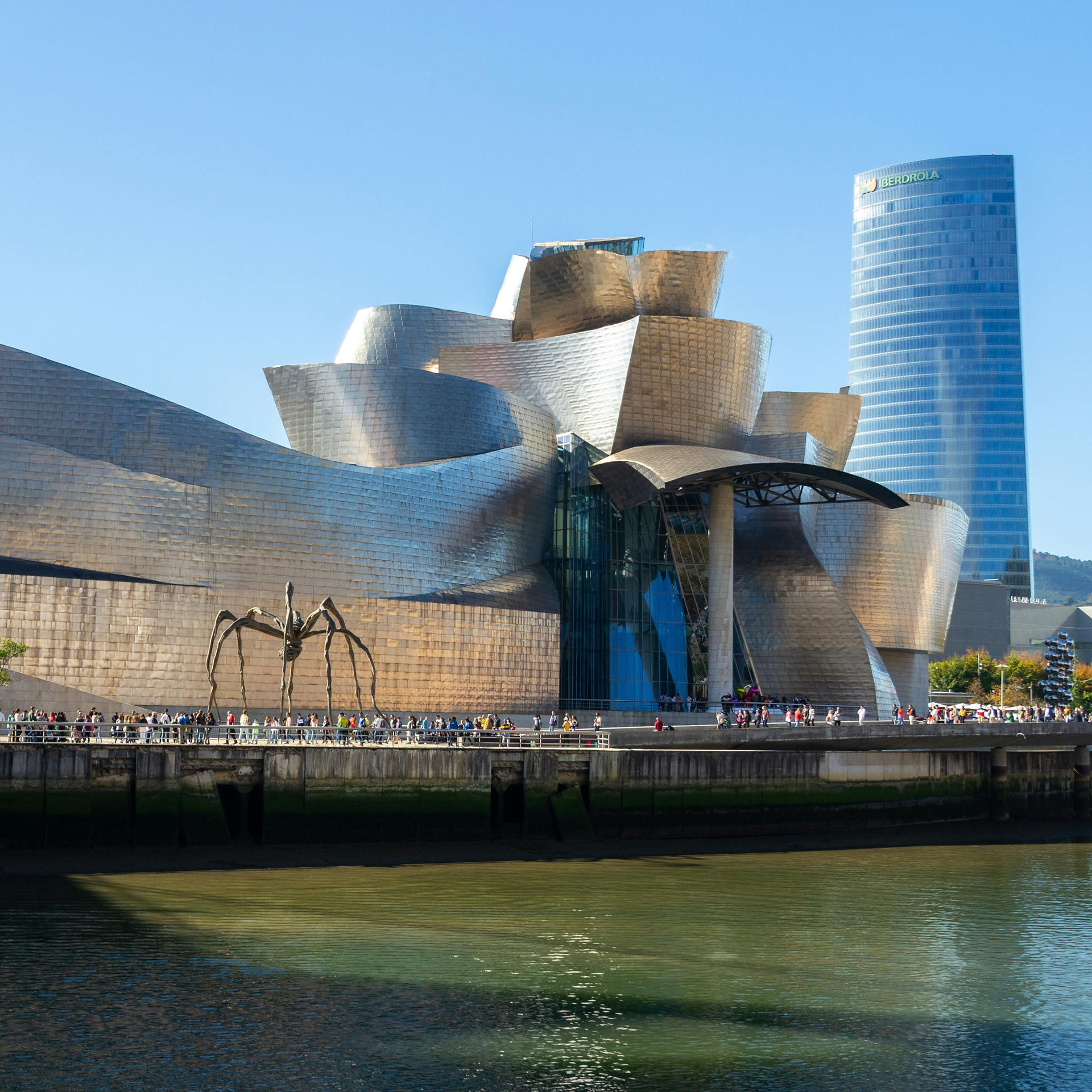

Bilbao is the cultural heart of the Basque Country and a natural starting point for exploring Northern Spain. Once an industrial city, it has transformed into a vibrant destination where contemporary architecture meets deep-rooted tradition.
The Guggenheim Museum dominates the skyline with its striking titanium curves and remains one of Spain’s most iconic modern landmarks. Beyond the museum, Bilbao reveals a different side of itself. Wander through the Casco Viejo (Old Town), where narrow streets lead to lively plazas, traditional taverns, and local markets.
Along the river, modern bridges and green promenades contrast beautifully with historic buildings, making Bilbao a city that feels both forward-looking and deeply authentic.
How to get there: Bilbao Airport (BIO) has direct connections across Spain and Europe. Trains connect the city to San Sebastián and Santander.
Best time to visit: May–June and September–October for mild weather and fewer crowds.
Tip: Consider combining your stay in Bilbao with an easy day trip to Gaztelugatxe and Guernica – both are close by and offer a great introduction to the Basque Country’s landscapes and history.
3. SANTIAGO DE COMPOSTELA


Santiago de Compostela is the historic and spiritual heart of Galicia, best known as the final destination of the Camino de Santiago pilgrimage. For centuries, travelers from across Europe have walked these routes to reach the city, making it one of Spain’s most important cultural and religious centers.
The city’s focal point is the Cathedral of Santiago, a monumental Romanesque structure that dominates the old town and marks the end of the Camino. Surrounding it, the UNESCO-listed historic center is a compact area of stone streets and arcaded walkways, where many of Santiago’s main landmarks and historic buildings are located.
Beyond its religious importance, Santiago is an active university city with a steady rhythm shaped by everyday life rather than tourism alone. This makes it an ideal place to slow down and experience northern Spain in a more local, authentic way.
How to get there: Santiago de Compostela has an international airport (SCQ) with regular connections across Spain and Europe. It’s also well connected by train to A Coruña, Vigo, and other Galician cities.
Best time to visit: May–June and September–October for mild weather and fewer crowds. Late July is especially lively during the Feast of St. James.
Tip: The restaurant inside the Parador de Santiago (Hostal dos Reis Católicos), located right on Praza do Obradoiro, is often overlooked by visitors. Even if you’re not staying there, it’s worth stopping in for a meal – it’s one of the best places to try traditional Galician cuisine in a historic setting.
4. ISLAS CÍES


The Islas Cíes are northern Spain’s true hidden gem, a small archipelago off the coast that feels far removed from the rest of the country. Part of the Atlantic Islands National Park, these protected islands are known for their crystal-clear waters and unspoiled landscapes.
The highlight is Praia de Rodas, a long stretch of pale sand often ranked among Europe’s most beautiful beaches. From here, walking trails cross the islands, leading to viewpoints over the Atlantic and quiet coves where nature remains untouched. With no hotels and strict visitor limits, the Cíes have preserved a rare sense of calm and authenticity.
A visit here requires a bit of planning, as access to the islands is limited to protect the environment. Ferry tickets and entry permits must be booked in advance, especially during summer months, when daily visitor numbers are capped.
How to get there: Ferries depart mainly from Vigo, with seasonal services from Cangas and Baiona. The crossing takes around 40 minutes.
Best time to visit: June to September, when ferry services run regularly and sea conditions are calm.
Tip: Plan your visit early in the day and around low tide to enjoy the beaches at their best and avoid peak crowds.
5. ASTURIAS


Asturias offers one of the most diverse landscapes in northern Spain, with mountain areas alongside the Atlantic coast and a mix of rural towns and coastal cities. The region is known for its strong local identity and slower pace of life compared to other parts of Spain.
Oviedo, the capital, is a compact and elegant city with a well-preserved historic center, while nearby Gijón has a more maritime character, with beaches and seaside promenades. Beyond the main cities, Asturias is home to smaller towns like Cudillero and Llanes, and is shaped by a varied natural landscape that stretches to the peaks of the Picos de Europa National Park.
Asturias appeals to travelers who prefer slower travel and exploring areas outside of major cities, where nature plays a central role in daily life.
How to get there: Asturias Airport (OVD) offers domestic and limited international flights. The region is also accessible by train or car from Santander, León, and Galicia.
Best time to visit: May–September for mild weather and outdoor activities. Summer is ideal for hiking and coastal walks, while spring offers fewer crowds and lush landscapes.
Tip: Rent a car to explore Asturias fully – many of its most beautiful beaches, viewpoints, and mountain villages are best reached by road.
6. ORDESA Y MONTE PERDIDO NATIONAL PARK


Ordesa y Monte Perdido National Park lies in the central Pyrenees near the French border and reveals a striking inland landscape. The area is defined by wide valleys, steep mountain walls, and terrain shaped by rivers and glaciers.
The park’s most popular area is the Ordesa Valley, where well-marked hiking trails lead through forests, past waterfalls, and along river paths with views of towering canyon walls. Monte Perdido, one of the highest peaks in the Pyrenees, dominates the skyline and adds to the park’s striking scenery.
Ordesa provides access to one of Spain’s most significant mountain areas, offering a sense of space and remoteness that is difficult to find elsewhere in the country.
How to get there: The park is best accessed by car, with Torla and Broto serving as the main gateway towns. The nearest major cities are Zaragoza and Huesca.
Best time to visit: June to September, when trails are open and weather conditions are most stable.
Tip: If visiting in high season, plan your day in advance to make the most of the limited access and available transport options.
7. RIBADEO & PLAYA DE LAS CATEDRALES


Ribadeo marks the gateway between Asturias and Galicia and is best known for its dramatic stretch of coastline along the Cantabrian Sea. The town itself is small, relaxed, and an excellent base for exploring the surrounding area.
Just outside Ribadeo lies Playa de las Catedrales, known for its towering rock arches and sculpted cliffs shaped by the tides over centuries. Wander along the beach at low tide to walk beneath the stone formations, or head to the clifftop paths when the sea comes in to take in the full scale of the coastline from above. The changing tides give the area a different feel throughout the day.
Ribadeo and Playa de las Catedrales can easily be visited as a day trip from Santiago de Compostela.
How to get there: Ribadeo is best reached by car from Oviedo or Santiago de Compostela. Trains and buses also connect the town with nearby cities along the northern coast.
Best time to visit: Late spring to early autumn, when weather conditions are most favorable.
Tip: Check tide times in advance and plan your visit for low tide to walk beneath the rock formations at Playa de las Catedrales.
8. SANTANDER


Santander is an elegant coastal city set along one of the most beautiful bays in northern Spain. Known for its spacious beaches and refined architecture, it offers a quieter alternative to the larger cities of the north while still feeling lively and well connected.
The city’s highlight is the long stretch of coastline at El Sardinero, lined with wide beaches and coastal promenades ideal for walks and sea views. Inland, the Magdalena Peninsula adds a touch of history and greenery, offering open parkland and panoramic views over the bay. Santander’s compact center is easy to explore on foot, with cafés, markets, and waterfront paths close together.
Santander’s location makes it a convenient starting point for discovering the wider Cantabria region.
How to get there: Santander has its own airport (SDR) with domestic and limited international flights, as well as good train and road connections to Bilbao and other northern cities.
Best time to visit: June to September for pleasant weather and beach days, or late spring for fewer crowds.
Tip: Walk along the coastline from El Sardinero to the Magdalena Peninsula for some of the best views over the bay.
9. CANTABRIA (COMILLAS & SURROUNDINGS)


Cantabria sits between the Basque Country and Asturias, making it a natural stop along Spain’s northern coast and an easy addition to a wider road trip through the region. If you’re short on time, many of its highlights can also be visited as a day trip from Santander.
One of its highlights is Comillas, a small coastal town known for its elegant architecture and relaxed atmosphere. El Capricho, designed by Antoni Gaudí, stands out as one of its most distinctive landmarks, while the nearby Sobrellano Palace adds to the town’s historic character. Beyond Comillas, Santillana del Mar and the surrounding countryside make the area well suited to slow, unhurried exploration.
Cantabria works especially well for road trips, with short distances between towns and an easy rhythm that makes it simple to explore at a comfortable pace.
How to get there: Cantabria is best reached by car, with Santander serving as the main transport hub. The region is also connected by train and bus to Bilbao and Asturias.
Best time to visit: May to September, when the weather is mild and the landscapes are at their greenest.
Tip: Accommodation is limited in smaller towns, so booking ahead is a good idea if you’re traveling in summer or on weekends.
FREQUENTLY ASKED QUESTIONS (FAQ)
What is the most beautiful place in northern Spain?
Northern Spain doesn’t have a single standout destination, as beauty here comes in many different forms. San Sebastián is often considered one of the most striking cities thanks to its bay and elegant setting, while places like the Islas Cíes or Ordesa y Monte Perdido showcase some of the region’s most impressive natural scenery. The appeal of northern Spain lies in this variety, with coast, mountains, and historic towns all within relatively short distances.
Is Bilbao or San Sebastián better to visit?
Both cities offer very different experiences. Bilbao is larger and more urban, known for its museums, contemporary architecture, and cultural scene. San Sebastián, on the other hand, feels more compact and coastal, with a strong focus on food and seaside life. The better choice depends on what you enjoy more: culture and city life, or beaches and dining.
What is the best time to visit northern Spain?
Late spring and early autumn are generally the best times to visit. During these months, the weather is mild, landscapes are green, and there are fewer crowds than in peak summer. July and August can still be enjoyable, especially along the coast, but tend to be busier and slightly more unpredictable in terms of weather.
Where is the best place to stay in northern Spain?
The best base depends on the type of trip you’re planning. Cities like San Sebastián and Bilbao work well if you want good transport connections and easy access to restaurants and cultural sights. Santander is a convenient base for exploring Cantabria, while Santiago de Compostela is a good option if you’re interested in history and nearby day trips. If you’re looking for quieter surroundings, staying in smaller towns or rural areas between destinations can be a great choice.


